
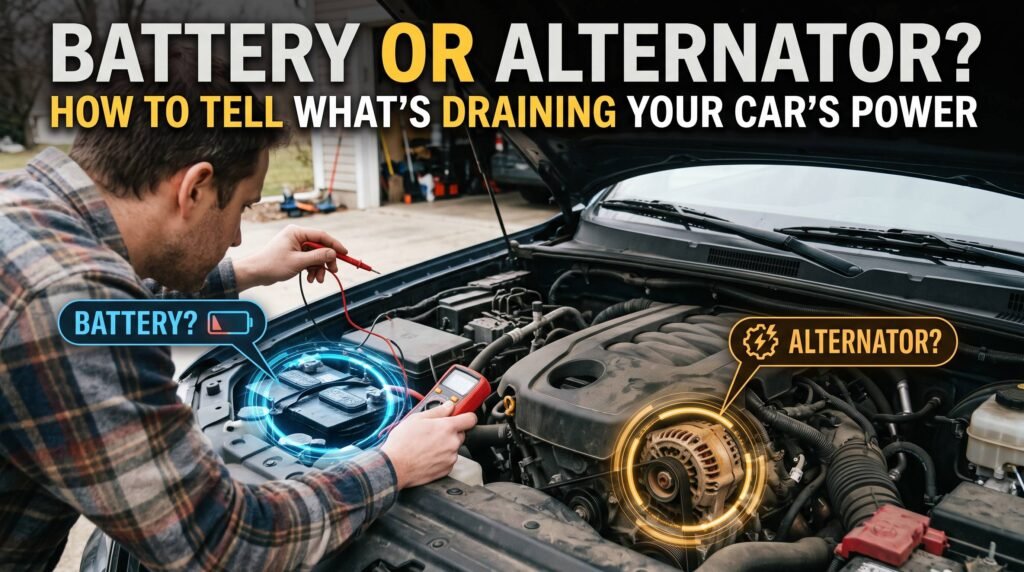
Few things are as frustrating as turning the key and getting nothing. But a car that won’t start doesn’t always mean you need a new battery. The alternator is just as likely to be the culprit, and replacing the wrong part wastes time and money. Here’s how to tell them apart.
Why Does a Car Battery Fail, and What Are the Symptoms?
The battery’s main job is to deliver the burst of power needed to start your engine. It also keeps your electrical systems running while the car is off.
Signs your battery is dead or dying:
- A rapid clicking sound: When you turn the key or press the start button, the starter clicks but the engine won’t turn over.
- Dim lights when starting: Your dashboard and headlights look weak before the engine fires up.
- Frequent jump-starts: If your car runs fine after a jump but won’t start again the next day, the battery can no longer hold a charge.
- Age: In Florida’s heat, batteries typically last only 3 to 4 years. According to AAA’s battery guide, heat, vibration, and time are the three biggest factors in battery life, and Consumer Reports found that AGM batteries tend to handle high temperatures better than other sealed types.
Why Does an Alternator Fail, and What Are the Symptoms?
Once the engine is running, the alternator takes over. It powers the entire electrical system, including lights, radio, and A/C, while also recharging the battery as you drive.
Signs your alternator is failing:
- The car stalls while driving: This is the clearest warning. A failing alternator forces the car to drain the battery’s remaining power, and once it’s depleted, the engine shuts off.
- Flickering or fluctuating lights: If your headlights dim when you accelerate or surge in brightness, the alternator isn’t regulating voltage properly.
- Sluggish accessories: Power windows move slowly, or the radio cuts out on its own.
- A dashboard warning light: The battery icon (or the letters ALT/GEN) comes on. Ironically, this light usually points to a problem with the charging system, meaning the alternator, not necessarily the battery itself. AAA’s guide to alternator warning signs also notes that worn or cracked belts can keep an alternator from working properly.
The Key Test: Battery or Alternator?
There’s a quick way to find out which part is at fault. Start by jump-starting your car, then watch what happens after the cables come off.
- If it’s the battery: The car stays running after you remove the cables. The alternator is doing its job, but the battery won’t hold a charge for the next start.
- If it’s the alternator: The car starts with the jump but dies almost immediately once the cables are removed, because the alternator isn’t producing the electricity needed to keep the engine running.
Keep in mind that the symptoms overlap a lot, so this test is a starting point, not a final answer. AAA’s own technicians recommend a professional charging system test to confirm the real cause.
The Right Fix at High Tech Motors
Guessing can be costly. You might buy a new battery, only to have a faulty alternator kill it again within days.
The professional solution is a computerized electrical diagnostic. At High Tech Motors, our system diagnosis and repair service connects your vehicle to advanced testing equipment that precisely measures your battery’s cranking voltage and your alternator’s charging output. ⚠️
Whether you need a heavy-duty battery built for Florida’s heat or a new alternator installed, every repair is backed by a 1-year warranty. Since a weak battery and a failing A/C often show up together in summer, ask us about our air conditioning services while your car is in the shop. ⚠️
📍 Visit us: 2450 S Military Trail #3, West Palm Beach, FL 33415
📞 Schedule your electrical diagnostic today: (561) 642-7473 or make an appointment online ⚠️
Don’t get stranded on the side of the road. If you’re having electrical trouble, bring your vehicle to High Tech Motors and let our expert mechanics get you back on the road quickly, safely, and with peace of mind.