When to Visit a Mechanic
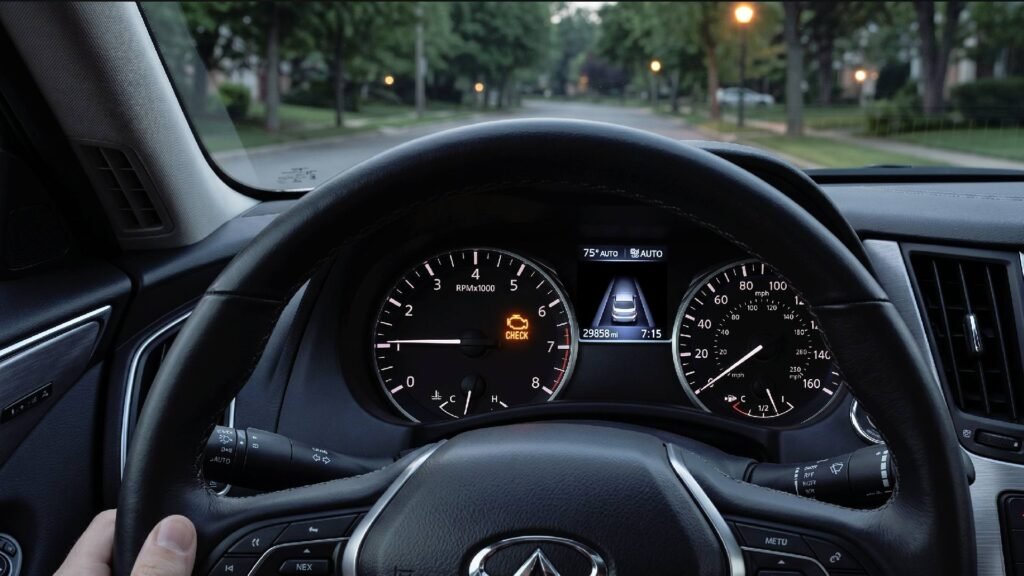
It’s a situation every driver in West Palm Beach dreads: you’re cruising down Military Trail, listening to your favorite music, and suddenly, that little amber icon lights up on your dashboard. The notorious Check Engine Light.
Instantly, your mind starts racing. Is my car about to break down? How much is this going to cost me?
At High Tech Motors, we know how stressful that little light can be. However, seeing it doesn’t mean your engine is about to explode. In fact, it’s just your car’s internal computer telling you that something in its system needs attention.
To help put your mind at ease, let’s break down what your check engine light actually means, the most common reasons it turns on, and what you should do next.
1. Is the Light Solid or Flashing? (The Golden Rule)
Before you panic, take a close look at how the light is behaving. This tells you exactly how urgent the problem is:
-
Steady/Solid Light: If the light stays on but the car seems to be running fine, it means there is an issue that needs to be checked soon, but it is not an immediate emergency. You can safely drive home or to our shop, but don’t ignore it for weeks.
-
Flashing/Blinking Light: This is an emergency. A flashing check engine light usually indicates a severe engine misfire, which can dump unburned fuel into your exhaust system and destroy your catalytic converter (a very expensive part to replace). If it’s flashing, pull over safely and have your car towed to a professional auto repair shop immediately.
2. Common Reasons for a Check Engine Light
The onboard diagnostics system (OBD-II) monitors everything from your exhaust emission controls to your engine’s vital functions. Here are some of the most frequent culprits behind that amber glow:
A Loose Gas Cap
Believe it or not, this is one of the most common reasons the light turns on. Your car’s fuel system is sealed to prevent vapors from escaping. If the gas cap is loose, cracked, or missing, the system detects a leak.
-
The Fix: Pull over, tighten your gas cap, and drive for a day or two to see if the light resets itself.
Failing Oxygen (O2) Sensor
The O2 sensor measures how much unburned oxygen is in your exhaust system. If it fails, your car’s computer won’t know how to mix the right amount of fuel and air, leading to poor gas mileage and potentially damaging your spark plugs.
Bad Spark Plugs or Wires
Spark plugs are responsible for igniting the fuel-air mixture in your engine. Over time, they wear out. In Palm Beach County’s high-humidity climate, ignition components can experience extra stress, leading to misfires and triggering the dashboard light.
Catalytic Converter Failure
Your catalytic converter turns harmful carbon monoxide into safer emissions. It usually only fails if smaller issues—like bad spark plugs or a faulty O2 sensor—are ignored for too long.
3. Why You Shouldn’t Rely on “Free” Parts Store Scans
We’ve all seen the signs outside auto parts stores offering “Free Engine Code Checks.” While they can read the raw code (for example, a code like P0300), a code reader does not diagnose the root cause.
A code for an “O2 sensor lean reading” doesn’t always mean the sensor is broken; it could mean you have a vacuum leak, a clogged fuel injector, or an engine mechanical issue. Simply replacing the sensor based on a free scan often results in spending money on a part you didn’t actually need, while the light stays firmly turned on.
Reliable Diagnostics Near Me in West Palm Beach
At High Tech Motors, we don’t guess—we investigate. Our expert mechanics use advanced computer diagnostic scanners to read your vehicle’s specific codes. We then perform targeted mechanical testing to pinpoint the exact root cause of the issue, saving you time and money.
Don’t let a dashboard light ruin your peace of mind or lead to expensive future repairs. If your check engine light is on, bring your vehicle to our shop for an honest, transparent, and accurate diagnostic service.