
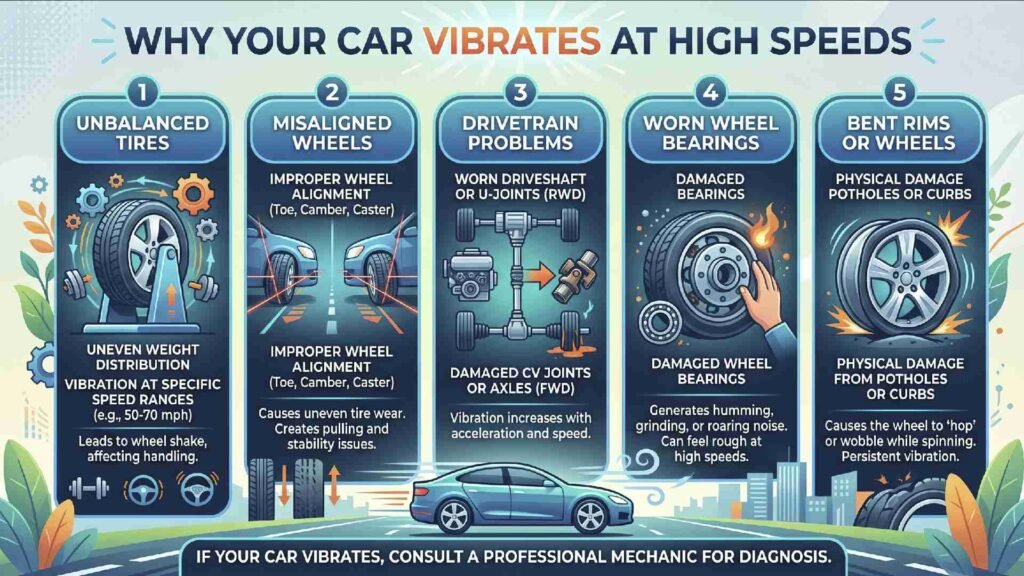
Feeling your car vibrate while driving on I‑95 or the Turnpike is more than uncomfortable. It’s a sign that something isn’t working as it should. Although many drivers ignore the issue, high‑speed vibration often points to mechanical problems that can affect safety, fuel efficiency, and long‑term reliability.
Because Florida’s roads, heat, and humidity create unique driving conditions, vibration symptoms tend to appear more frequently here. Understanding the causes — and recognizing the early warning signs — can help you prevent expensive repairs.
Below are the most common reasons your car shakes at high speeds, along with practical detection tips and guidance on when to visit High Tech Motors in West Palm Beach.
🚗 1. Tire Balancing Problems
Unbalanced tires are the number one cause of vibration at highway speeds. As the wheels rotate, even a small weight difference creates uneven motion. At low speeds, the issue may go unnoticed; however, once you reach 55–70 mph, the shaking becomes obvious.
Detection Tips
- Steering wheel shakes between 55–70 mph
- Vibration fades at lower speeds
- Uneven or “cupped” tire wear
- Car feels unstable on long highway drives
Florida Factor
Because heat expands rubber, balancing issues often intensify during summer months.
🛞 2. Misaligned Wheels
Alignment problems develop quickly in Florida due to construction zones, potholes, and uneven pavement. When wheels aren’t aligned, they fight against each other, creating vibration and premature tire wear.
Detection Tips
- Car pulls slightly left or right
- Steering wheel sits off‑center
- Tires wear faster on one edge
- Vibration increases while turning
Why It Matters
Misalignment forces your suspension to compensate, which leads to additional vibration and reduced fuel efficiency.
🔧 3. Worn Suspension Components
Your shocks, struts, and bushings absorb road impact. As they wear out, they lose the ability to stabilize the vehicle, which results in shaking at higher speeds.
Detection Tips
- Bouncing sensation after hitting bumps
- Clunking noises on uneven roads
- Excessive body roll
- Vibration that worsens with passengers or cargo
Florida Factor
Humidity accelerates deterioration of rubber bushings and mounts.
⚙️ 4. Damaged Engine or Transmission Mounts
Mounts keep your engine and transmission firmly in place. When they crack or weaken, the entire vehicle can shake — especially during acceleration or at highway speeds.
Detection Tips
- Vibration felt in the seat and floor, not just the steering wheel
- Shaking during acceleration
- Harsh vibration when shifting gears
- Visible movement under the hood
Why It’s Serious
Ignoring mount issues can cause misalignment of critical components and lead to costly repairs.
🛠️ 5. Brake Rotor Problems
Warped rotors don’t only cause vibration when braking. In some cases, they create shaking even when you’re maintaining high speeds.
Detection Tips
- Vibration increases when braking at highway speeds
- Pulsating brake pedal
- Steering wheel shakes during braking
- Burning smell after long drives
Florida Factor
Stop‑and‑go traffic in West Palm Beach overheats rotors, making warping more likely.
🔩 6. Driveshaft or Axle Issues
Rear‑wheel and all‑wheel‑drive vehicles rely on a driveshaft and axles that spin at high RPM. When these components are damaged, vibration becomes intense and often dangerous.
Detection Tips
- Vibration intensifies with acceleration
- Clicking or clunking noises
- Shaking felt throughout the entire vehicle
- Difficulty maintaining high speeds
Why It Matters
Even minor damage can create major vibration because these parts rotate rapidly.
🛞 7. Tire Damage or Low-Quality Tires
Florida’s heat is tough on tires. Low‑quality rubber or aging tires often deform, creating vibration at high speeds.
Detection Tips
- Bulges or flat spots
- Uneven tread depth
- Vibration that worsens after long drives
- Tires older than 4–5 years
Safety Note
A damaged tire can fail suddenly — especially during summer.
🧭 How Florida Drivers Can Reduce High-Speed Vibration
To minimize vibration issues, consider adopting a few preventive habits. First, rotate and balance your tires every 5,000–7,000 miles. Additionally, check your alignment twice a year, especially if you frequently drive through construction zones. It also helps to inspect suspension components annually and replace tires before they reach four years of age. Finally, avoid potholes when possible and schedule a diagnostic as soon as vibration appears.
🔍 When to Visit High Tech Motors in West Palm Beach
High‑speed vibration rarely disappears on its own. In fact, it usually gets worse over time. At High Tech Motors, our technicians use advanced diagnostic tools to identify the exact cause — whether it’s tires, alignment, suspension, or drivetrain issues. You’ll receive clear explanations, honest pricing, and fast service so you can drive with confidence again.
📍 2450 S Military Trl #3, West Palm Beach, FL 33415 📞 (561) 642-7473